
'The essence of RMG is that users participate in skill-based games for financial reward, so this law would directly affect this operating model for both users and gaming companies.'

Foreign brokerages remain cautious on the road ahead for the Indian equity markets. Though analysts at Nomura have revised their March 2026 Nifty target to 26,140 levels from the earlier 24,970, but the upside from the current levels is a modest 6 per cent. BofA Securities, on the other hand, has not made any change to its year-end Nifty target.

There have been more instances of a management team buying out the owners of a company after the pandemic. There are eight such transactions, called management buyouts (MBOs), in the five years ending 2024, according to data from tracker LSEG shared with Business Standard.

The ultra-rich invest differently -- embracing growth, compounding, and long-term clarity to build wealth with purpose and discipline, explains Ramalingam Kalirajan.

India's mergers & acquisitions (M&As) market recorded deals worth $45.44 billion in the first half of 2025, up nearly 3.3 per cent from a year ago, even as ultra large-ticket transactions remained subdued. During the first half, the 7.1 per cent rise in deal count to 1,614 signals continuing appetite among domestic conglomerates and private equity (PE) funds for mid-sized and smaller assets.

'Consider 40% to 50% in equities, 10% in gold as a hedge, and the remaining 30% to 40% split between multi-asset funds and hybrid funds.'

'For 40 years, India valued only technical skills. IITs, coding -- that became everything.' 'Soft skills were sidelined. But those are the skills that will keep you employable now, not technical skills.'

Mutual fund assets surged 23 per cent or over Rs 12 lakh crore year-on-year to reach a record of Rs 65.74 lakh crore in FY25, propelled by robust net inflows and mark-to-market gains amid buoyant equity and debt markets.

India's craft chocolate makers are changing the market by using local cacao, creating bold new flavours, making chocolate both a luxury and a story.

The proposed reforms in goods and services tax (GST) announced by the government last week, coupled with the eighth pay commission dole-out, is likely to push consumption-driven stocks - such as air conditioners (ACs), select automobiles, fast-moving consumer goods (FMCG), retail, and counters of quick-service restaurants (QSRs) - into higher orbit over the next few months, believe analysts.
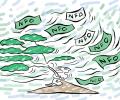
A strong influx of 11 equity new fund offers (NFOs) in June, particularly within the thematic space, helped mutual funds collect Rs 14,370 crore - the highest ever via such introductory offers. This surpassed the previous high recorded in July 2021, where four NFOs accumulated Rs 13,709 crore, with ICICI Prudential MF's flexicap NFO alone mobilising Rs 9,808 crore.

'We continue to view India as a standout within EM.'

Sebi's probe against Jane Street is part of its efforts to mitigate losses for individual derivative traders.

'As long as Sebi maintains transparency and market stability, the Jane Street episode is unlikely to deter long-term foreign capital.'

Reels often induce the FOMO-'Act now!' mentality. But sound investing is about consistency, diversification and a long-term horizon.

Infrastructure bonds, which were relied upon the most in 2024-25 (FY25) by commercial banks to raise funds through the domestic debt capital market amid lagging deposit growth, seem to have lost their sheen in FY26. So far in FY26, no bank has tapped the domestic debt capital market to raise funds via infra bonds, and the expectation is that the amount raised through this route will be significantly lower than that last year, unless credit demand picks up.

So, the next time someone tempts you with a slightly higher FD rate from a lesser-known bank, point them to hybrid funds that can deliver extra returns without the administrative and emotional rollercoaster.

Sensex sinks 573 pts on global tensions and high crude prices

While demand for sub Rs 50-lakh affordable housing prevails, market players cite increased land rates, escalated construction costs and low margins as key prohibiting factors.

When we talk about Exchange-Traded Funds (ETFs), a few of their features that strike our mind are their low cost, easy-to-understand composition, and simple trading. While Index ETFs have always been popular among investors, Gold ETFs have garnered interest in recent years due to gold prices fluctuating near their all-time highs. But from a long-term investing context, do these ETFs really deliver?

From the Sensex pack, Bajaj Finserv, Larsen & Toubro, Bajaj Finance, HDFC Bank, Bharat Electronics and Kotak Mahindra Bank were among the major laggards. However, Tata Steel, Asian Paints, UltraTech Cement, and Trent were the biggest gainers.
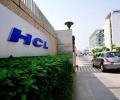
HCLTech on Monday reported a 9.7 per cent decline in consolidated net profit for the April-June quarter of this fiscal year at Rs 3,843 crore as the IT services firm and pegged the revenue growth guidance at 3-5 per cent for FY26. HCLTech had logged a net profit (attributable to owners of the company) of Rs 4,257 crore in the year-ago period, according to a regulatory filing.

At the end of the day, this isn't about choosing between EMIs and SIPs. It's about choosing your path to financial freedom.

India's top IT services firms delivered single-digit revenue growth in April-June, capping off a mixed, somewhat-sobering quarter as macroeconomic instability and geopolitical tensions weighed on global tech demand and delayed client decisionmaking. Management commentary painted a mixed picture, caution prevailed, yet industry CEOs also emphasised cost optimisation, vendor consolidation, and opportunities in AI makeovers.

Foreign investors continued their relentless selling in the Indian equity markets in August, offloading shares worth Rs 21,201 crore due to the unwinding of the yen carry trade, recession fears in the US and ongoing geopolitical conflicts. This came after an inflow of Rs 32,365 crore in July and Rs 26,565 crore in June, data with the depositories showed.

Nissan is targeting annual domestic sales and exports of 100,000 units each by financial year 2026-27.

From the Sensex constituents, Tata Steel, Bajaj Finance, Bharti Airtel, Adani Ports, Eternal, Bajaj Finserv, NTPC, HDFC Bank, Reliance Industries and Axis Bank were among the major gainers. In contrast, Trent, State Bank of India, Tech Mahindra, Maruti and Mahindra & Mahindra were among the laggards.

Excess earnings of unlisted companies over and above their interest costs are at a record level. The interest-coverage ratio of 2.94 is the highest going back to 1990-91, according to numbers from the Centre for Monitoring Indian Economy (CMIE). The ratio measures earnings relative to every rupee to be paid as interest on outstanding debt.

Tata Steel's consolidated net profit more than doubled to Rs 2,007.36 crore during the June quarter, on account of "increase in net steel realisations and the planned cost-takeouts" across geographies. The Tata Group entity had posted a net profit of Rs 918.57 crore in the year-ago period.

Some of the key names include: Maruti, M&M, Ashok Leyland, Britannia, Ultratech, JK Cement, Havells, Voltas, Amber, Metro, Trent, LemonTree, Indian Hotels, Niva Bupa, HDFC Life, IGL, Acme Solar, Suzlon, Swiggy, Delhivery, ICICI Bank, HDFC Bank, Bajaj Finance, Shriram Finance," according to a report by Motilal Oswal Financial Services.

As fintech major Pine Labs gears up for its initial public offering (IPO), its Draft Red Herring Prospectus has highlighted its top executives' pay and stock options, including those of Chief Executive Officer (CEO) Amrish Rau. Rau's net worth is estimated at Rs 850 crore-1,000 crore following the IPO.

'The new Bill introduces no policy or rate changes, leaving financial planning strategies largely unaffected.'
'The considerations for choosing between the old and new tax regimes remain essentially unchanged.'

Exchange Traded Funds (ETFs) have stepped into the spotlight this quarter. With evolving market conditions and shifting investor sentiment, ETFs offer a timely solution for accessing growth with liquidity and efficiency. In this article, we break down the most important ETF trends, performance drivers, and what to watch in the months ahead.

With inflation comfortably below the Reserve Bank of India's (RBI's) 4 per cent median target and likely to undershoot its 3.7 per cent projection for 2025-26 (FY26), there is room for the monetary policy easing cycle to be sustained, the Finance Ministry said on Monday. The comments, featured in the ministry's Monthly Economic Review for June 2025, assume significance ahead of the Monetary Policy Committee (MPC) meeting of the Reserve Bank of India (RBI) scheduled to begin from August 5.

Tata Motors on Friday reported a 62.2 per cent decline in consolidated net profit to Rs 4,003 crore in the June quarter, impacted by volume decline across segments, drop in JLR profits due to US tariffs and high base effect due to gain from sale of discontinued operations. The auto major had posted a consolidated net profit of Rs 10,587 crore in the April-June quarter of the previous fiscal, Tata Motors Ltd (TML) said in a regulatory filing.

The interplay between domestic and foreign capital will shape India's equity markets.

Valuations at current levels have historically corresponded single-digit returns.

Despite the rally in equities over the last few years, India, according to Christopher Wood, global head of equity strategy at Jefferies, is still in early stages of an equity cult. Any changes to the capital gains tax for equities - both long-term and short-term - in Budget 2024 scheduled to be announced on July 23, he believes, can trigger a bigger correction that what the markets witnessed post the Lok Sabha election outcome on June 4 that saw the Bharatiya Janata Party (BJP) lose majority, though it was able to form the government with the help of coalition partners.

A multibagger stock multiplies its original investment several times, delivering returns of 100%, 200%, or even higher. The excitement of finding such wealth creators is undeniable, but the process of identifying them is far from simple. It requires a careful blend of research, patience, and the right set of tools.
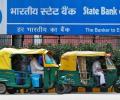
State Bank of India (SBI), the largest lender in the country, has launched a share sale to institutional investors to raise upto Rs 25,000 crore, the biggest qualified institutional placement (QIP) so far by an Indian firm, and has set a floor price of Rs 811.05, which is at a 2.5 per cent discount on Wednesday's closing price.
